 My sophomore year of college, soon after I discovered Pride and Prejudice, some people in my dorm did a “marathon” of the 1995 BBC/A&E adaptation (during Reading Recess, nominally in conjunction with the theater’s production of Sense and Sensibility). I (alas!) missed that showing, but over the next several years I’ve had (and taken) the chance to see both that miniseries and the other three screen Pride and Prejudice adaptations. This is something of a comparative review. Continue reading “The Pride and Prejudice Adaptations: A Comparative Review”
Category: Film
Words and Pictures: Adapting Stories to the Screen
I’ve written before about my opinion of several then-recent movies adapted from favorite novels. Though some were better than others, I felt that each movie—even those I pronounced “great”—was not nearly as good as it could easily have been, because the books were far better and the movies had made so many unnecessary changes (several of which were simply bad decisions even ignoring the books entirely).
But then there are the few gems that are both quite faithful adaptations and brilliant productions per se. The ones I’ve seen, where I knew and loved both books and adaptations, were the first two in the Harry Potter series and the BBC Pride and Prejudice adaptations. What made these succeed when others failed? Continue reading “Words and Pictures: Adapting Stories to the Screen”
Dawn Treader: Unworthy of the name
Back in October I saw the trailers for the Voyage of the Dawn Treader movie and expressed dismay at the direction the film seemed to be going. When I saw the film earlier this year, I discovered it was worse than I feared.
In that response to the trailers, I summarized the recent history of Inklings-novel dramatizations: great films, but far inferior to the books. The filmmakers clearly loved and generally understood the books, but didn’t “get” them deeply enough to do them justice. For true fans of the books, the Lord of the Rings and earlier Narnia movies were at worst disappointments. Dawn Treader, by contrast, is a slap in the face—a deliberate insult. Continue reading “Dawn Treader: Unworthy of the name”
Trailers indicate Dawn Treader off course
Two and a half years ago, I wrote:
The Lord of the Rings. The Lion, the Witch, and the Wardrobe. And now Prince Caspian. Each of these may be a great movie. But each was allegedly adapted from a truly extraordinary novel.
In each of those movies, where the filmmakers’ choices differed from the originals they varied from hack-work to “very good but not as good as the original.” (Plus a few necessary cuts.) Fortunately, their additions and substitutions tended to be closer to the “inferior only to the original” side of the spectrum than to hack work; unfortunately, based on the latest trailers for the upcoming film adaptation of The Voyage of the Dawn Treader (I tip my hat to E. Stephen Burnett and GlumPuddle), it looks to have reversed that trend. Continue reading “Trailers indicate Dawn Treader off course”
Mythprint’s second review of Caspian on target
This was originally posted on Facebook as a Note on August 19, 2008.
A few months ago Mythprint (the quasi-monthly publication of the Mythopoeic Society) printed a favorable review (which I do not have to hand, alas) of the film Prince Caspian that left me wondering if they’d seen the same film I had. It has now made at least some amends by printing a review that addresses other specifics of the problems I have discussed in general at length in previous Notes. A nearly-identical version (probably a previous draft, since something from a comment made it into the print version) may be found here [the Internet Archive cache of that post’s original location has a bit of interesting discussion in the comments]. The title given to the printed review is “The Peter Jacksonification of Narnia.”
Some points from the review that I want to emphasize: Peter Jackson is a horror film diredctor who turned a “character-driven epic of high fantasy” into “an action-driven horror-fest.” Similarly, Adamson turned two children’s stories with serious spiritual content into action movies that trivialize the spiritual stuff—or just plain get it wrong. This isn’t to say that the stories these two men seem to be trying to tell couldn’t be interesting films; it’s just that they aren’t what we were promised. Jackson, Adamson, and Walden Media are participants in a bait-and-switch. But I do have high hopes for Dawn Treader, which has a new director whose last film was Amazing Grace (which I still haven’t seen).
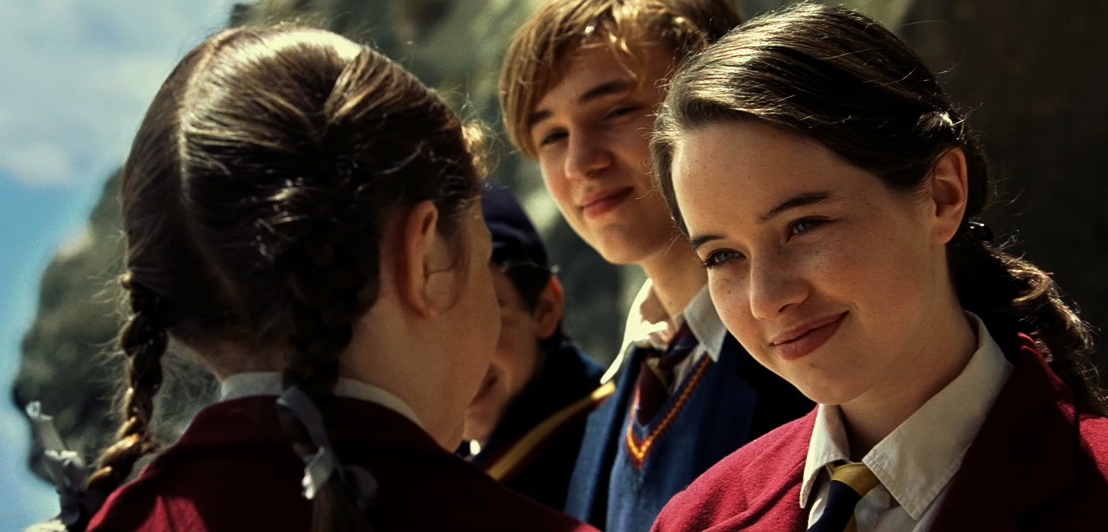
Prince Caspian: A (tragically) merely great movie
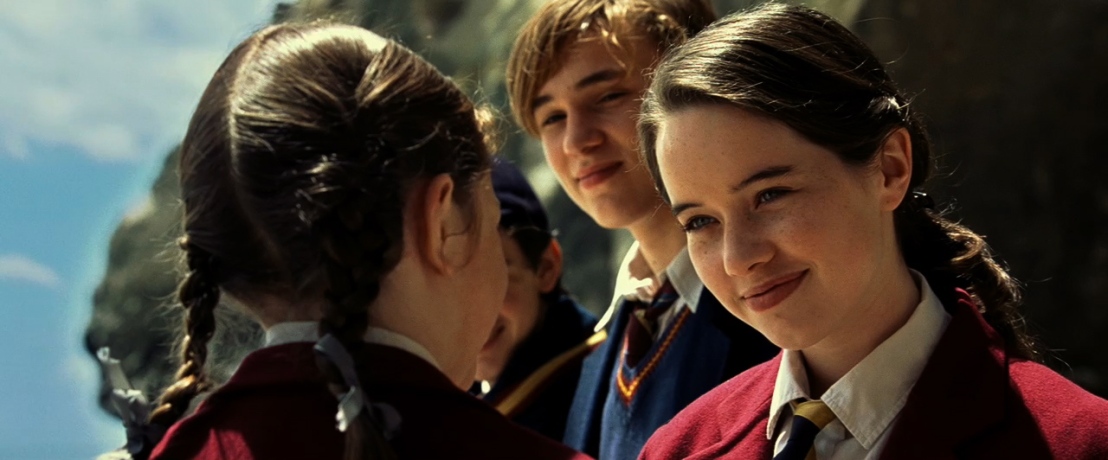 The Lord of the Rings. The Lion, the Witch, and the Wardrobe. And now Prince Caspian. Each of these may be a great movie. But each was allegedly adapted from a truly extraordinary novel. And that is perhaps the greatest tragedy. The most obvious failing of the filmmakers is that The Lord of the Rings truncated the story, removing what is in my opinion the most important sequence of the whole three volumes, the Scouring of the Shire, while adding minutes upon minutes of unnecessary battle action sequences. And all of them made changes to the temporal sequence that would work . . . if there were not the highly superior originals to compare them to. Continue reading “Prince Caspian: A (tragically) merely great movie”
Caspian trailers excite, disappoint
This was originally posted on Facebook as a Note on May 2, 2008.
 I wrote yesterday (this morning?) about the review of the upcoming Prince Caspian in The Banner. At that point all I had to go on was the book (worse: merely my memory of it), the review, and the inset of a poster of the movie. After sending the note to News Feeds across the state, I went looking for trailers, and found trailers and more, including TV ads and behind-the-scenes mini-documentaries. While all this visual stimulation stirred up what Lewis called Joy, the longing for the real country of which even Narnia is only a shadow, it also left me shaking my head. Continue reading “Caspian trailers excite, disappoint”
Banner reviews, misunderstands Prince Caspian
This was originally posted on Facebook as a Note on May 1, 2008.

I read a review of Prince Caspian in the Banner. (For non-Calvin readers, the Banner is the denominational magazine of the Christian Reformed Church, which can be found in stacks across campus.) I (obviously) haven’t seen the film, and this review is making me (slightly) uneasy about the prospect, because the reviewer shows a near-total misunderstanding of what the book was about. Continue reading “Banner reviews, misunderstands Prince Caspian”
 Shine Cycle Online